
Workshop and Challacombe visit
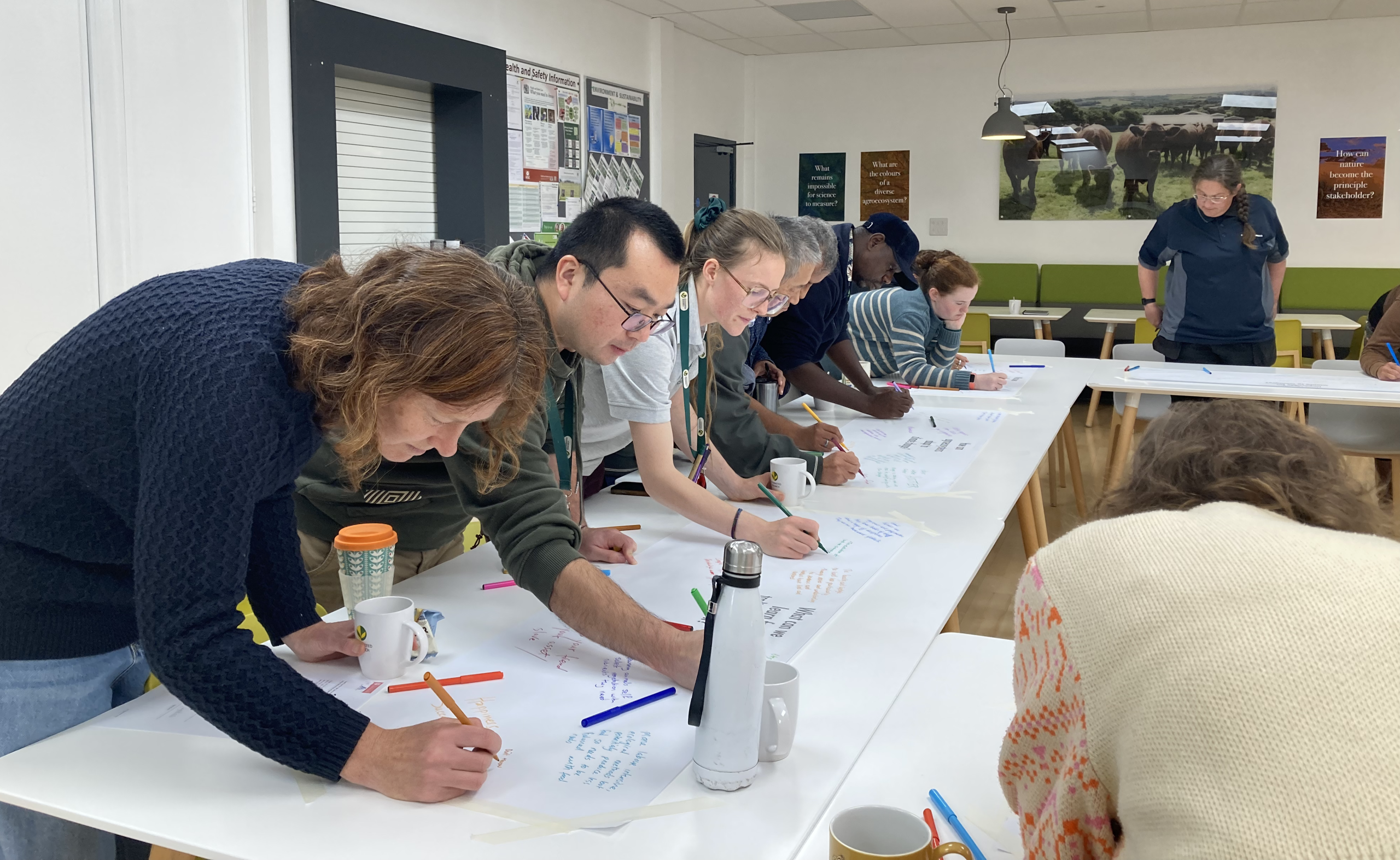
Some images froma workshop I delivered at Rothamsted Research North Wyke. In my practice, a creative workshop often comprises of some key elements – it brings people together in a playful and reflective way, there is energy and movement, and of course a creative activity. They are less focused upon teaching people ‘how to paint’ and more upon the dynamics of a group coming together. This was particularly important at Rothamsted because I had learnt that they don’t often have an opportunity to do this.
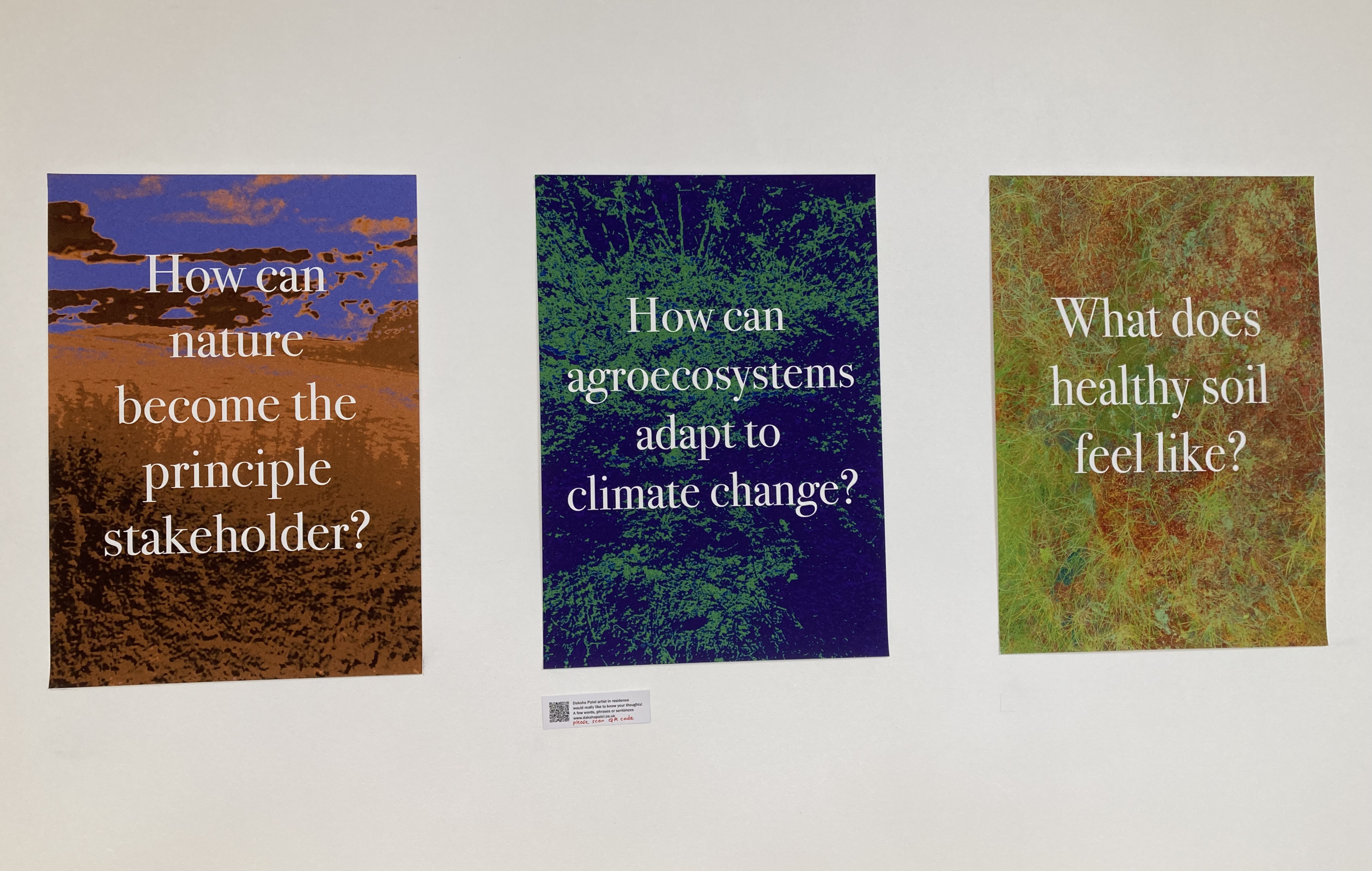
The workshop was titled ‘Adaptations’ and began with a quick-fire writing activity in response to the print questions. We had some wonderful responses such as: ‘Good farmers are engineers and polymaths, they know loads of stuff about a range of disciplines’ and ‘Healthy soil is like chocolate cake – dark, full of life, smells good, structured, aerated.’ A group discussion naturally followed this, with some really interesting thoughts upon what gets lost in translation from science to policy.
I had an opportunity to visit Challacombe farm, an organic farm during my visit to Devon. It is run by Naomi Oakley, who has innovated her farming practice to work with nature high up on Dartmoor. Her commitment to nature recovery informs every decision she makes about land use at Challacombe. Habitats and biodiversity are allowed space to thrive alongside her livestock; working with nature is in-built into the way she farms. Naomi holds her livestock in a very delicate balance with their environment by creating what she calls ‘niches for nature’. For example, their dung is without pesticides or veterinary medicines because she farms organically. This becomes a food source for a wide range of flora and fauna, particularly through the insects and everything that feed on the insects.
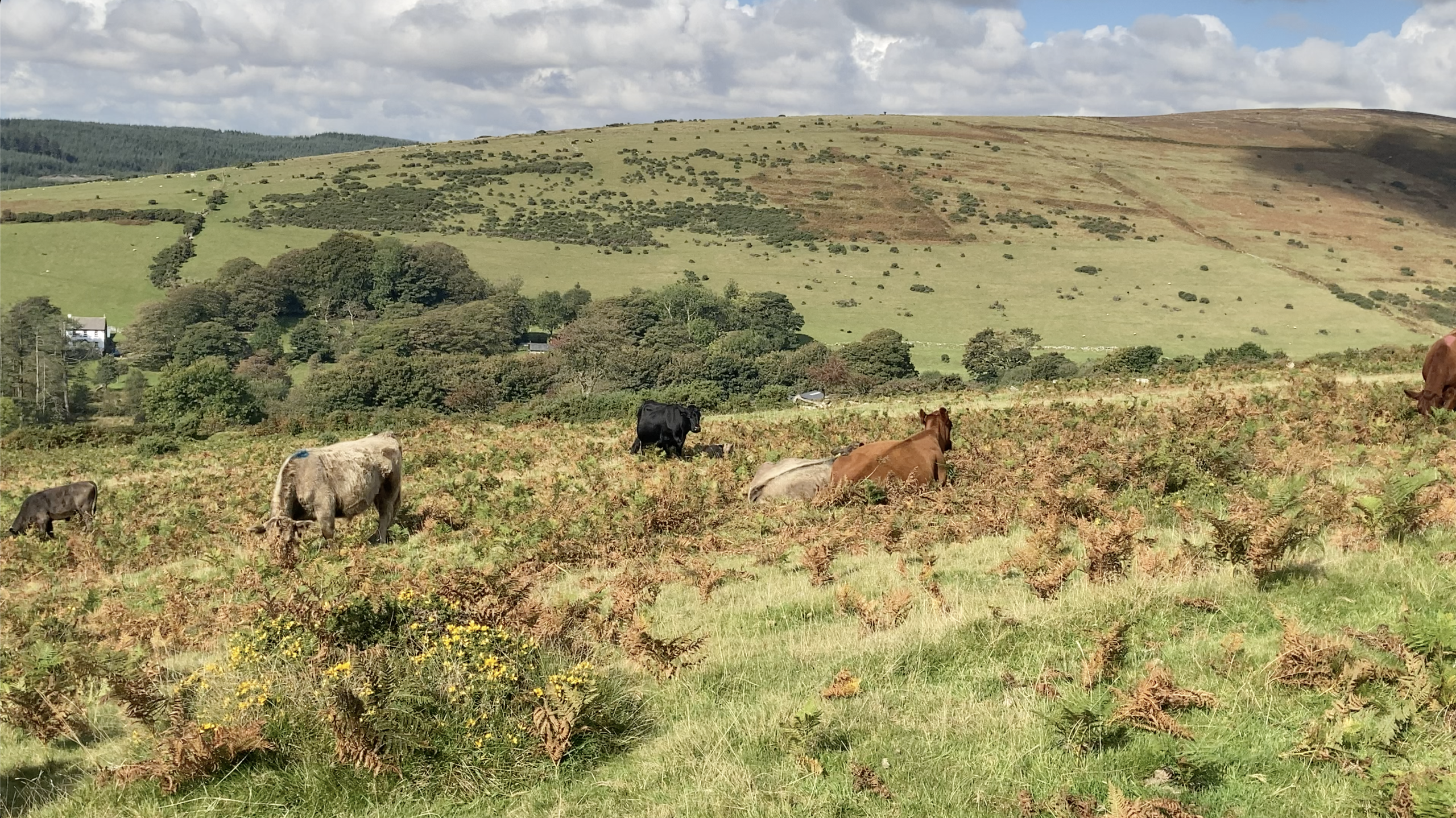
There was a different relationship with the land at Challacome compared to Rothamsted Research North Wyke, where the main aim of scientists is to answer research questions. This can create a separation from place through theory and the abstractions of science. And of course scientists do not live at Rothamsted, there is no personal history that connects them to the place. Nevertheless, acute observation and reflection upon farming practices is an ongoing process in both places. At Rothamsted Research technology plays a key role in measurement, whilst for Naomi observation is central. She is a very astute observer and original thinker, who is not afraid to explore creative solutions to everyday farming challenges and to do things differently. It was a privilege to meet her and learn about her farm.