
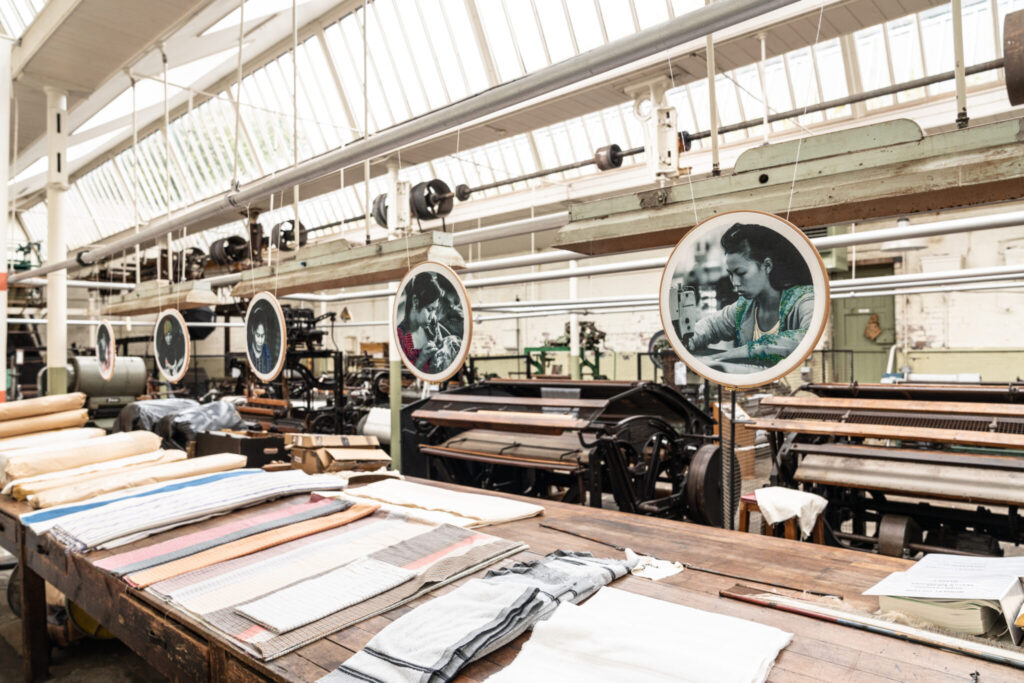
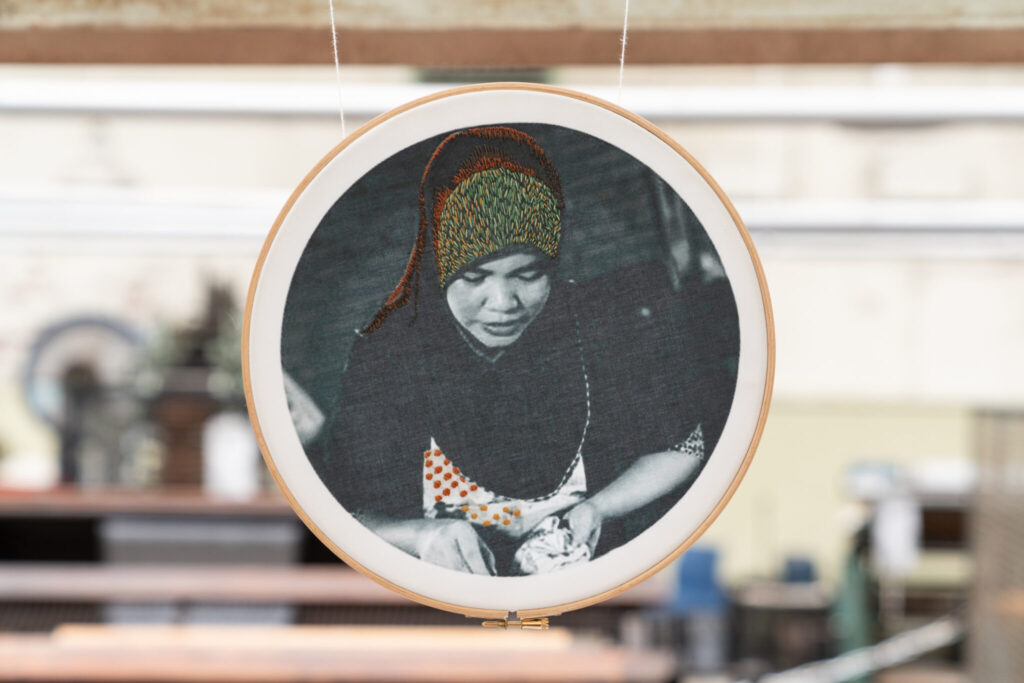
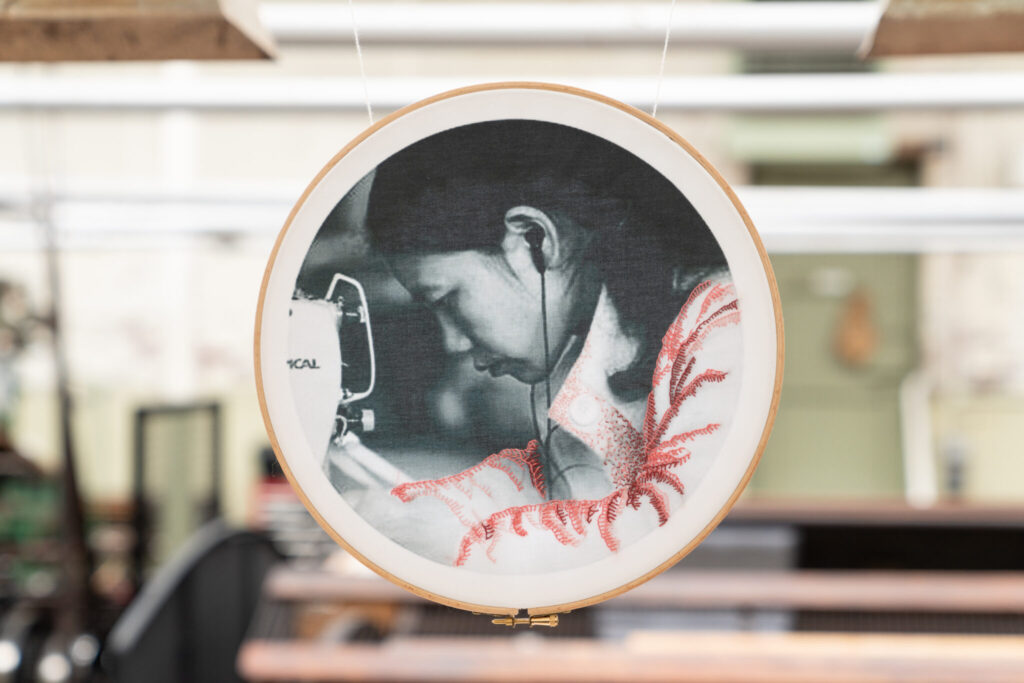
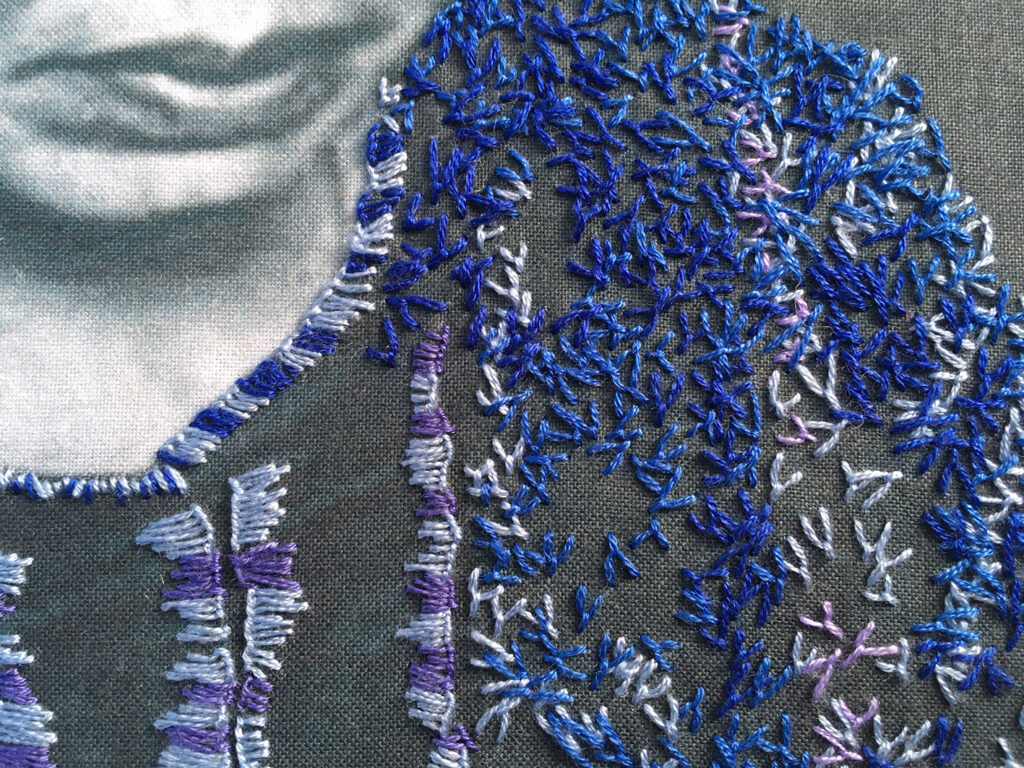
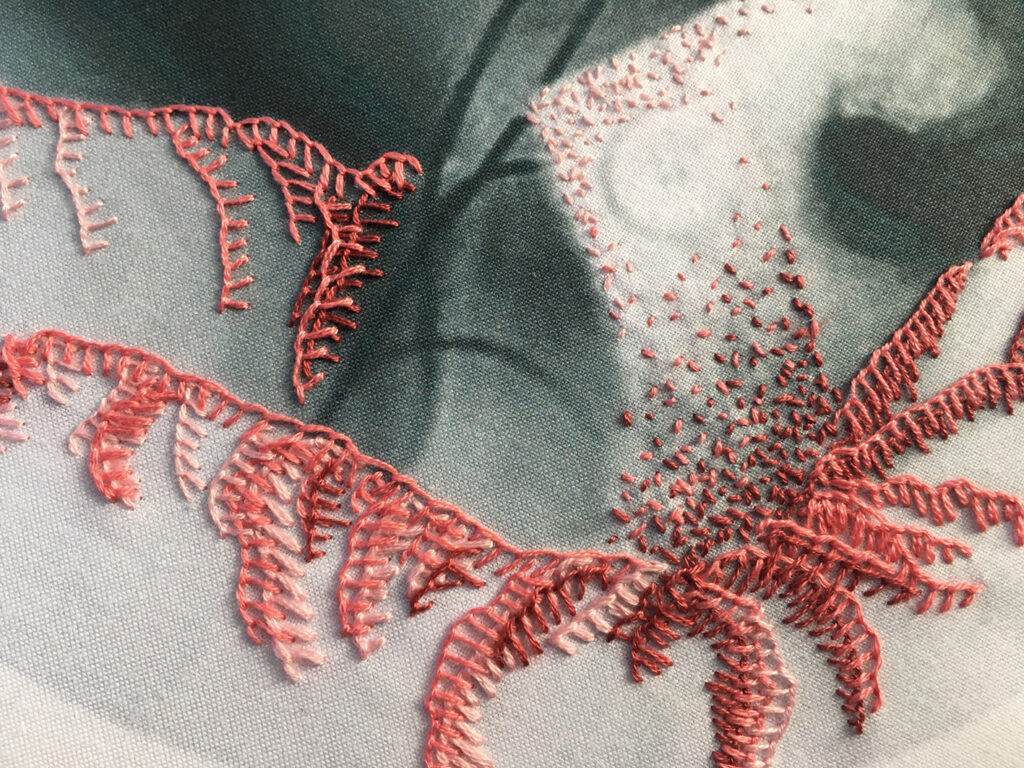
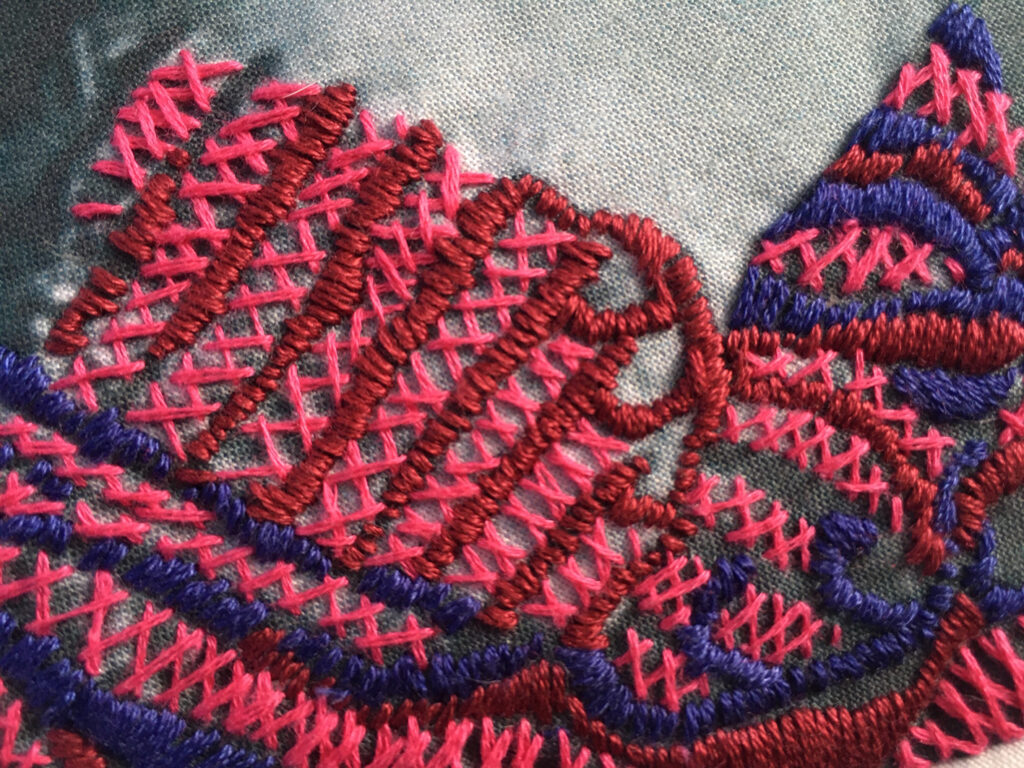
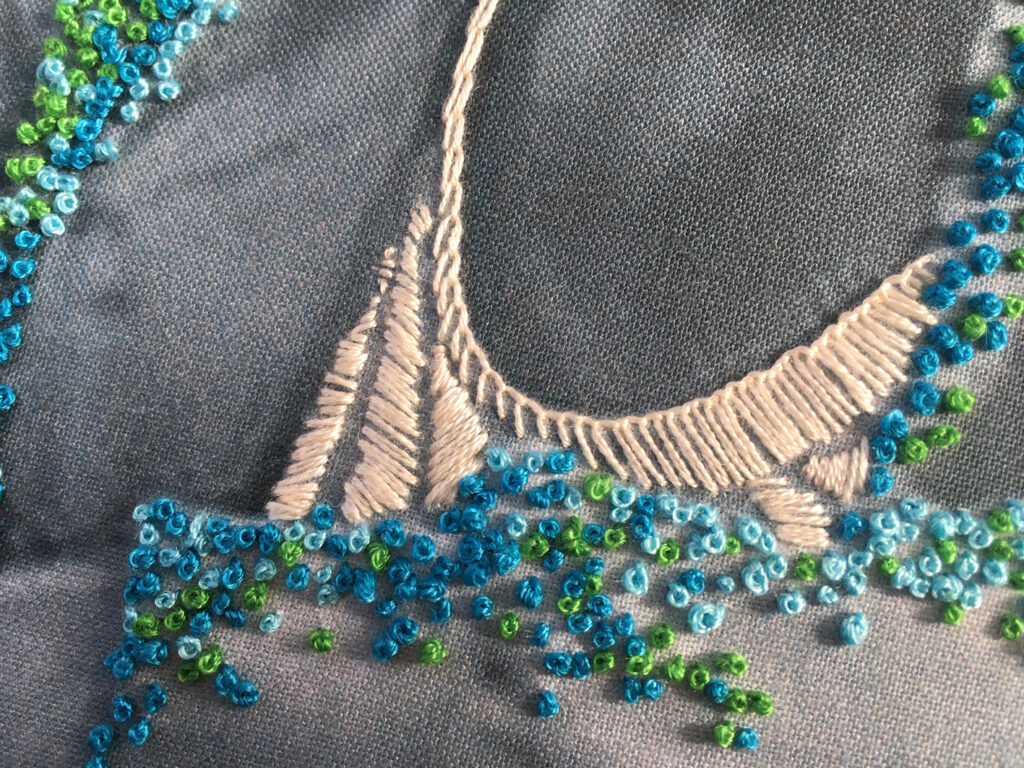
Two site specific installations at the wonderful Queen Street Mill Textile Museum, commissioned by Super Slow Way, and shown as part of the British Textile Biennial. Historically, women and children formed a large part of the workforce and shifts were 12-14 hours. The textiles fibres in the air that workers breathed in led to respiratory illnesses and the machinery itself was dangerous with frequent injuries. Workers communicated by lip reading because the noise of the bioler was deafening.
I researched the working conditions inside EPZ (Exports Processing Zones) of the textiles industry today. I learnt that EPZ sites (in the Phillipines, China, Bangladesh and Mexico) are often excempt from local employment and environmental laws. Union membership is regularly banned and excessive working hours and gender dicrimination is common.
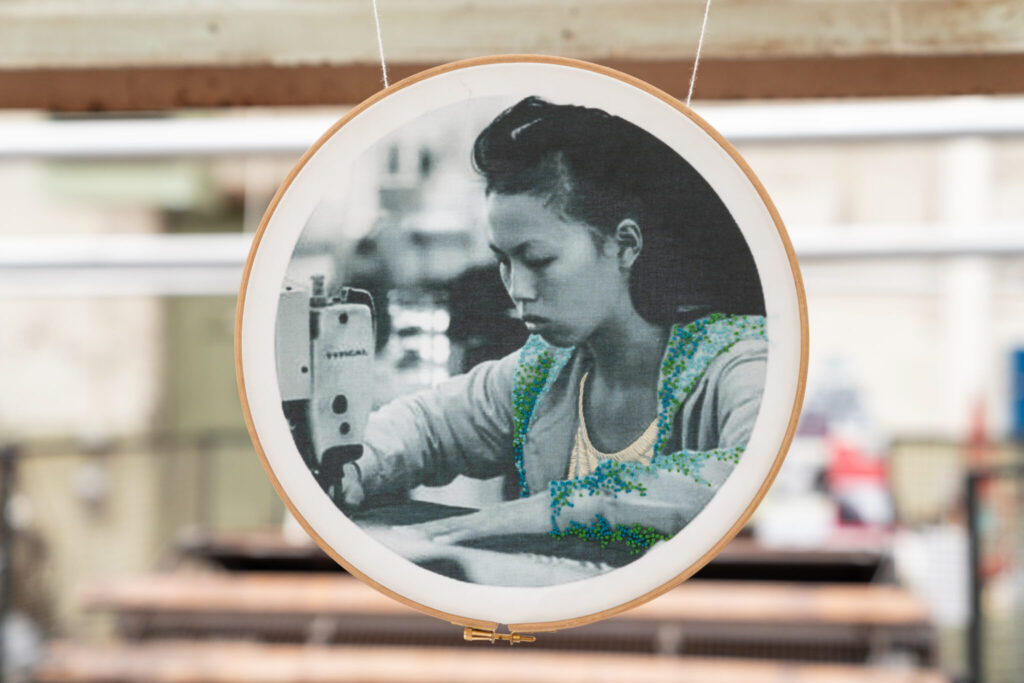
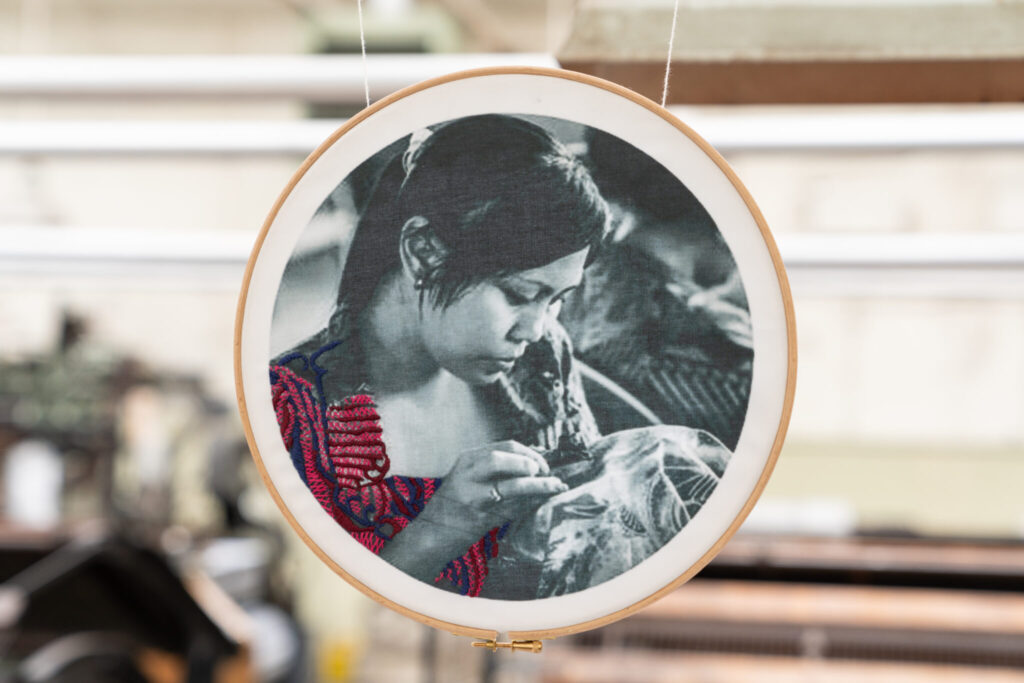
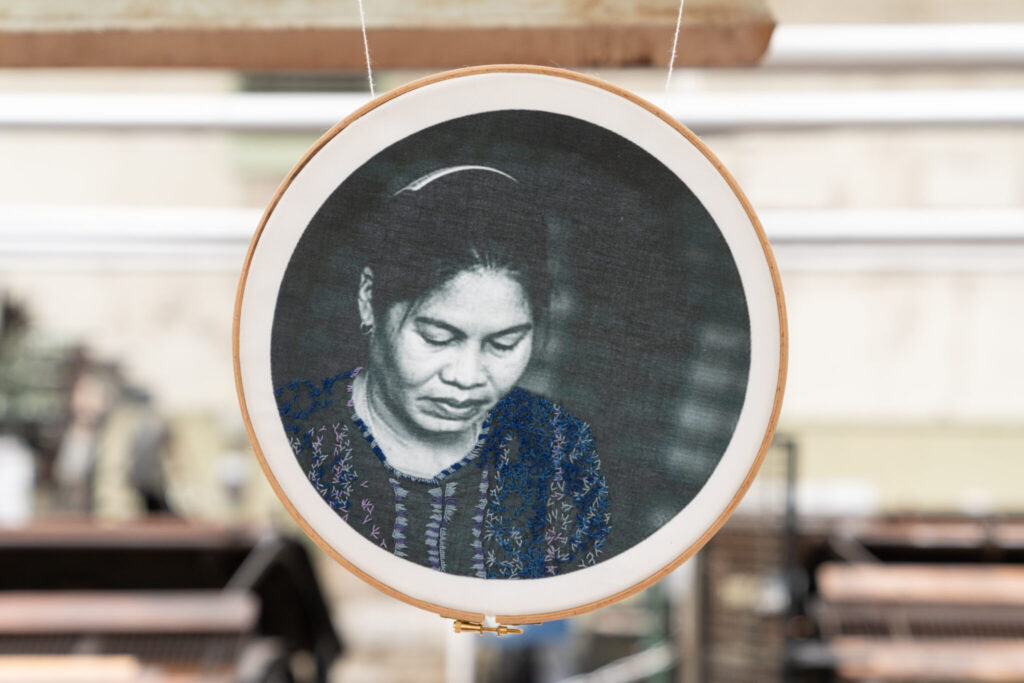
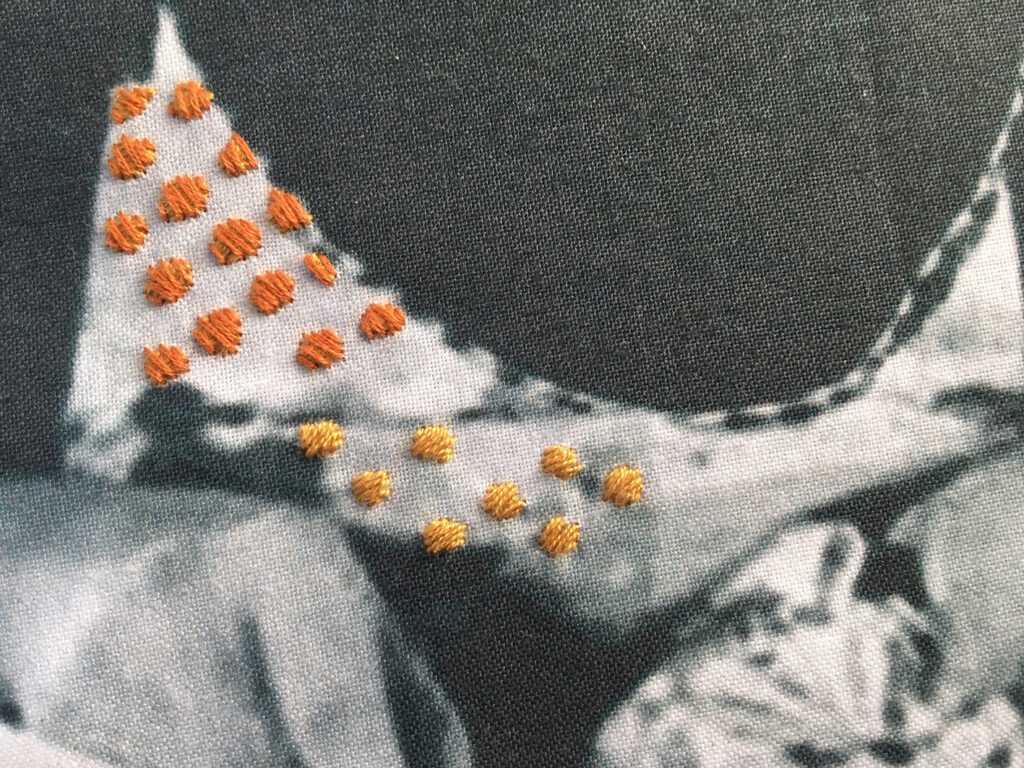
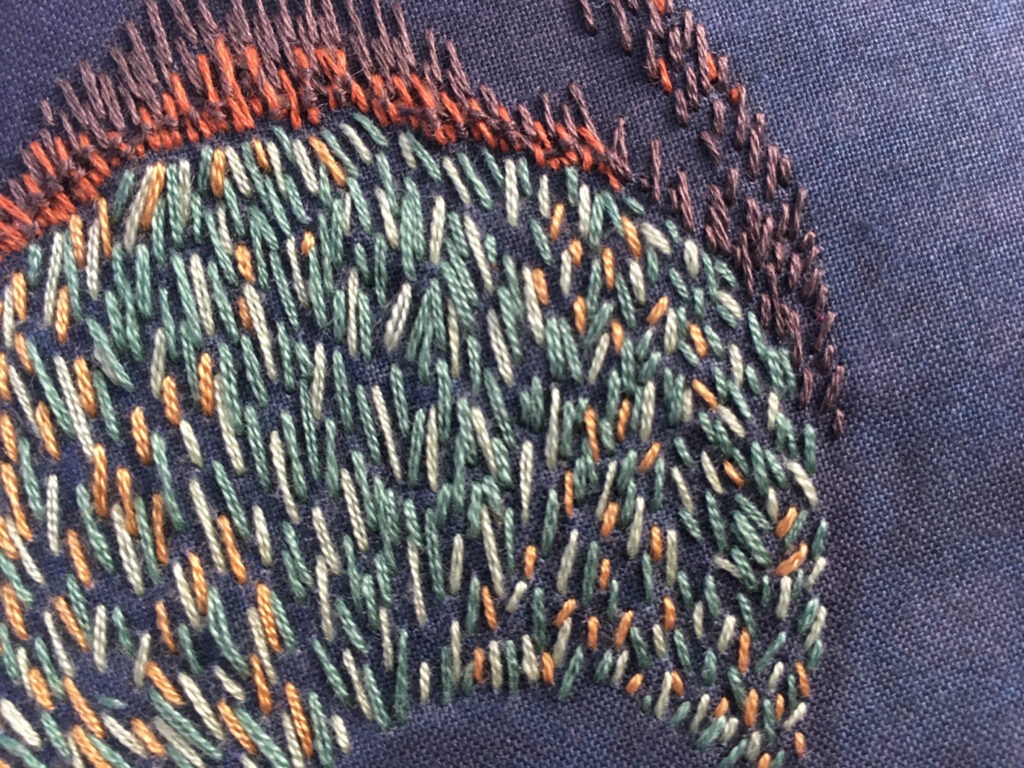
I printed images of women working in EPZ sites upon fabric. They were hung above the cutting tables, to make links between textiles workers in the past and in 21st century. I hand embroidered the images to emphasise the individuality of the women despite the anonymity of their working environments. I wanted to make them visible, especially because access to EPZ zones is often denied to journalists.
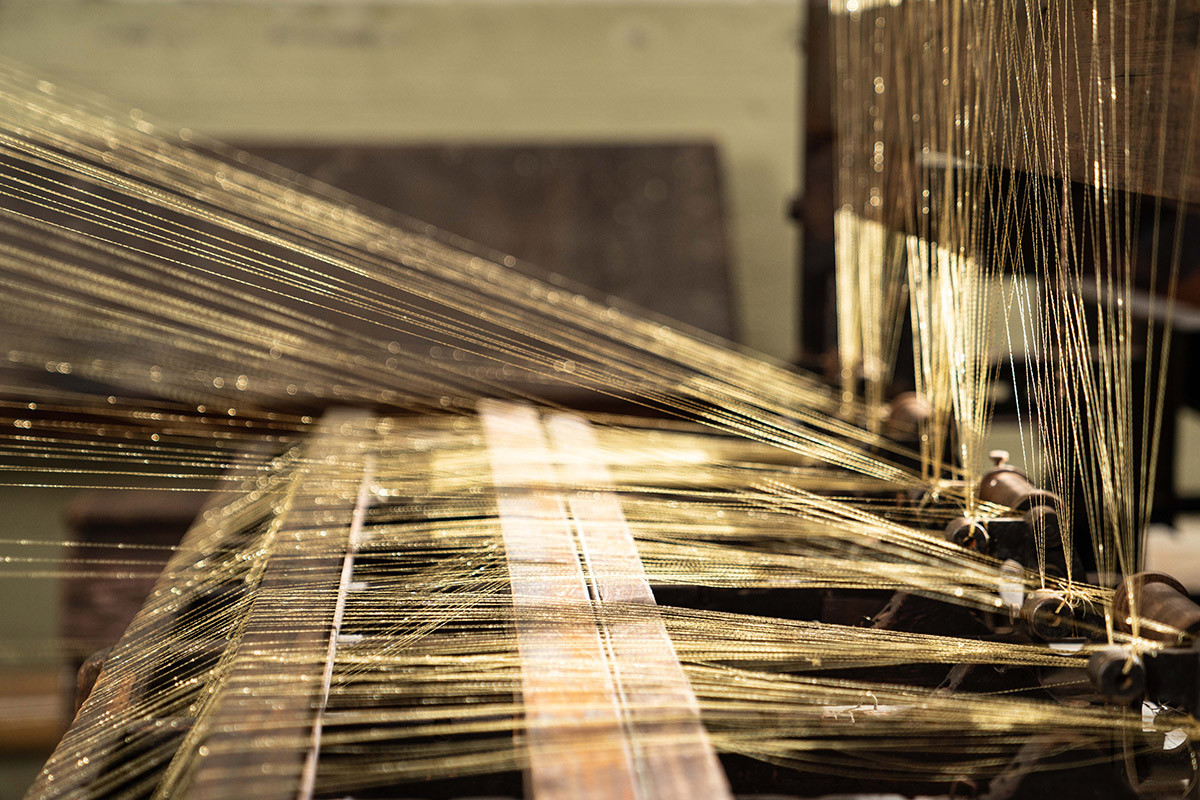
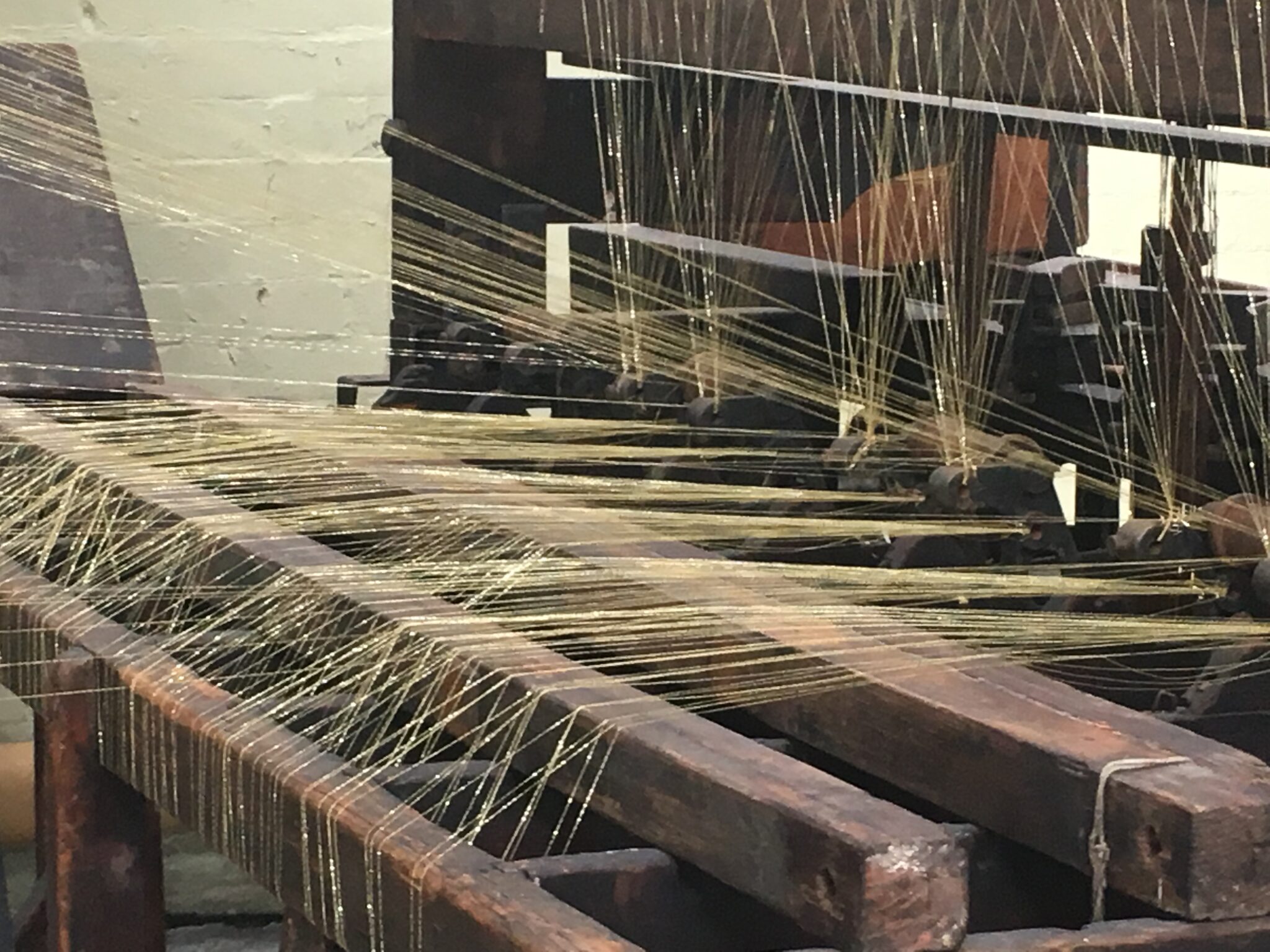
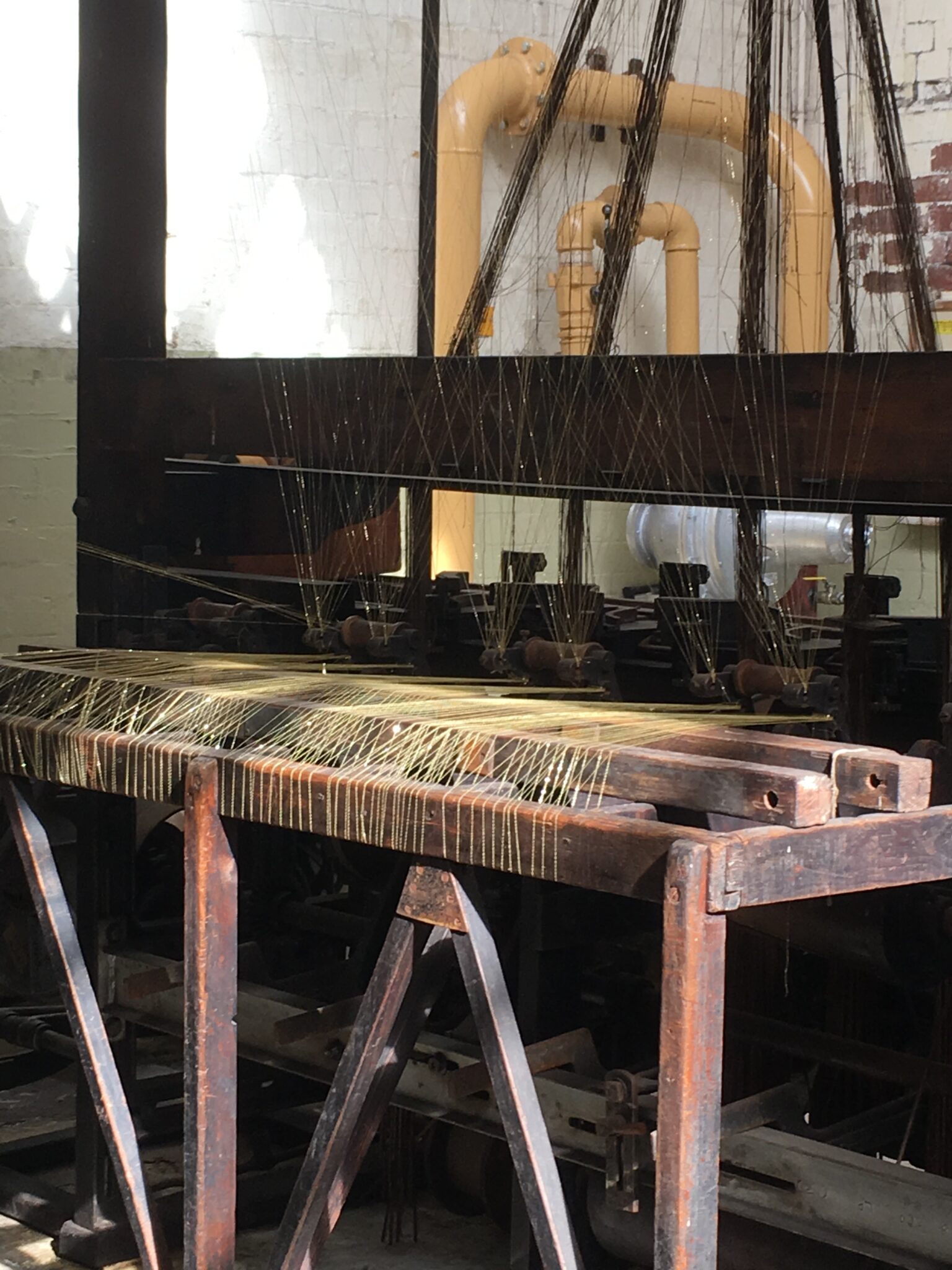
A historic loom that was once used for producing gold braids became the site of an installation using fine gold thread. I threaded this around the loom to evoke its former use.